The Role of AI-Powered Robots in Modern Manufacturing
18 August 2026
Walk through any advanced factory floor today, and you will notice something that was almost impossible a decade ago. The robots are not just repeating the same motion over and over. They are adjusting, deciding, and even predicting what happens next. This shift from programmed automation to intelligent robotics is not a small upgrade. It is a fundamental change in how manufacturing works, who does what, and what the factory of the future actually looks like.
For most of the twentieth century, manufacturing automation meant fixed sequences. A robotic arm would weld the same joint, place the same component, or paint the same panel, thousands of times a day. It worked well for mass production, but it failed the moment anything changed. A new product variant, a different material, or a slight shift in part placement would cause errors, downtime, and costly reprogramming. The robot was fast, strong, and precise, but it was also blind and deaf to its surroundings.
Artificial intelligence changes that equation. Instead of following a rigid script, AI-powered robots perceive their environment, interpret data, and make decisions in real time. They can handle variation, adapt to new tasks, and work alongside humans in ways that traditional automation never could. But the transition is not automatic, and it is not without trade-offs. Understanding what AI actually brings to the table, and where it falls short, is essential for anyone making decisions about manufacturing technology.
The Difference Between Automation and Intelligence
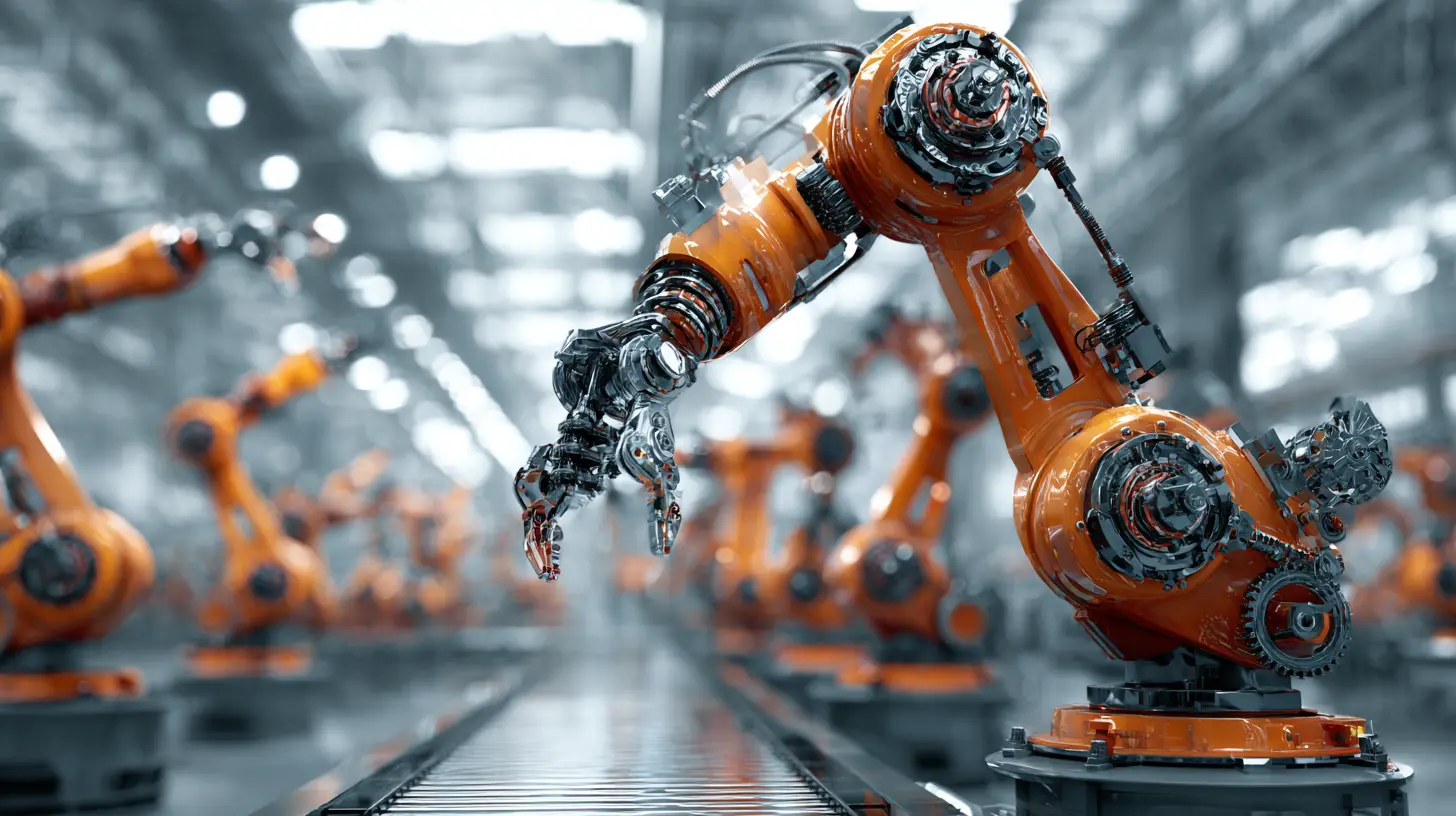
It helps to be precise about terms. Traditional industrial robots are automated. They execute pre-programmed paths with high repeatability. They are excellent at doing the same thing over and over, millions of times, without fatigue. But they have no awareness of what they are doing. If a part is slightly misaligned, the robot will either crash into it or fail to pick it up. The system does not know it made a mistake; it just knows the program did not complete.AI-powered robots, on the other hand, use machine learning models to process sensor data and adjust their actions accordingly. Vision systems identify the exact position of a part, even if it is rotated or partially obscured. Force sensors tell the robot how much pressure it is applying, so it can insert a delicate component without crushing it. Reinforcement learning allows the robot to improve its own performance over time, finding faster or more efficient paths without human intervention.
The practical difference is huge. A traditional robot is like a worker who has memorized a script but cannot improvise. An AI-powered robot is like a skilled craftsman who understands the goal and can figure out the best way to achieve it, even when conditions change. That flexibility is what makes AI attractive for modern manufacturing, where product lifecycles are shorter, customization is common, and supply chain disruptions are frequent.
Where AI-Powered Robots Actually Add Value
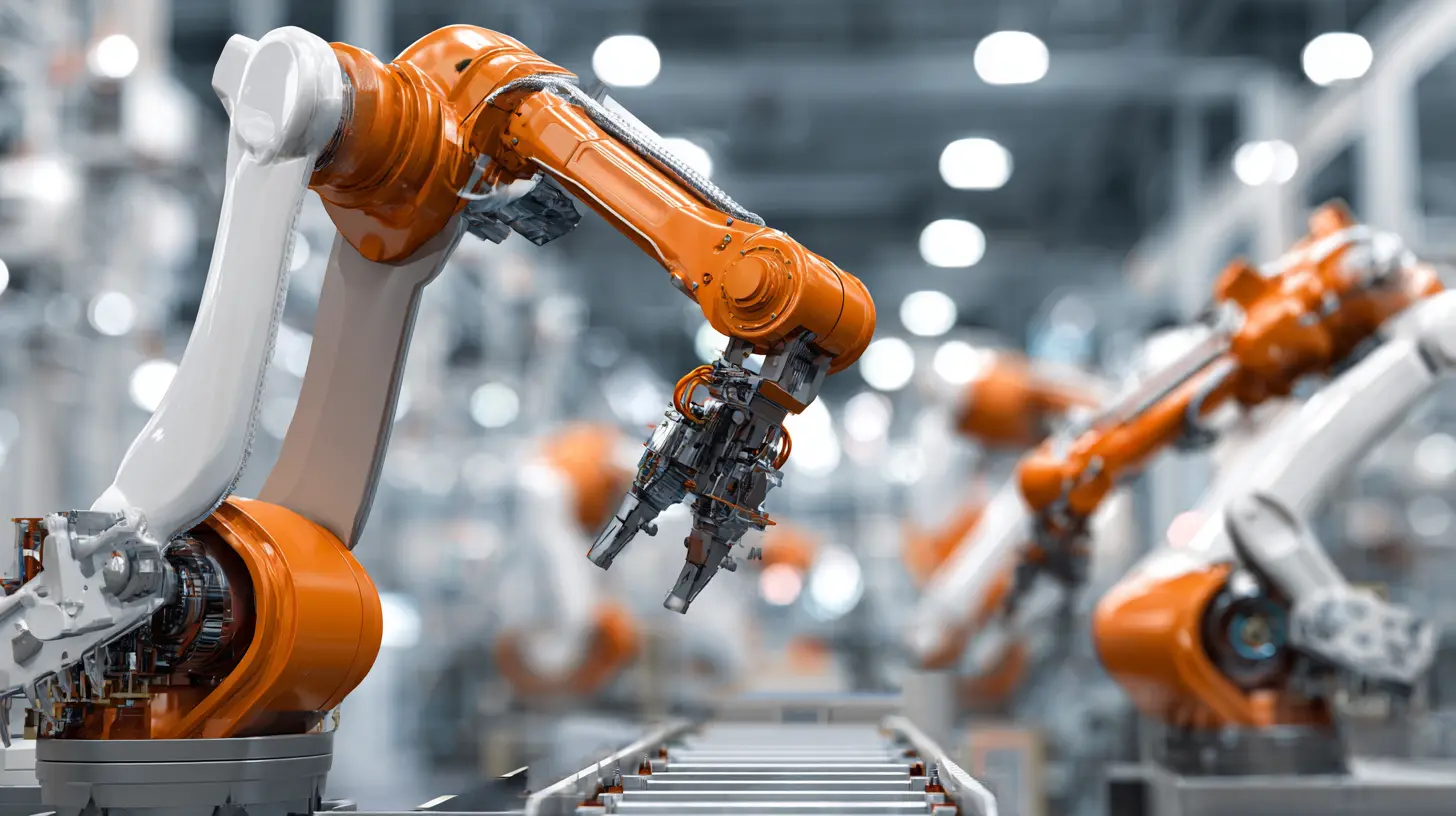
Not every task needs AI. In fact, many manufacturing processes are still best served by conventional automation. High-volume, low-variety production, such as bottling, stamping, or basic assembly, does not benefit much from intelligence. The parts are identical, the environment is controlled, and the task is repetitive. Adding AI to such a line would be overengineering, adding cost and complexity without a clear return.The real value of AI-powered robots appears in three specific areas: high-mix low-volume production, tasks that require perception and adaptation, and quality inspection that goes beyond simple checks.
High-mix low-volume manufacturing is the classic pain point. A factory that makes hundreds of different product variants, each in small batches, cannot afford to reprogram robots for every change. AI-powered robots can recognize the specific product on the line, retrieve the correct program from memory, and adjust their movements on the fly. This capability turns a rigid automation cell into a flexible production unit. For example, electronics manufacturers use AI-guided robots to place components on circuit boards where the layout changes frequently. The robot learns to identify different board types and adjusts its placement strategy without stopping the line.
Perception and adaptation matter most in tasks that involve uncertainty. Bin picking is a perfect example. In many warehouses and assembly lines, parts arrive in bins in random orientations. A traditional robot cannot handle this because it needs to know exactly where the part is. An AI-powered robot with a 3D vision system can scan the bin, identify individual parts, calculate their pose, and plan a collision-free path to grasp them. This is not a trivial problem. The robot must deal with overlapping parts, varying lighting, and reflective surfaces. Modern AI models handle these challenges well, and the result is that tasks previously done by hand, such as kitting, sorting, and feeding machines, can now be automated.
Quality inspection is another area where AI shines. Traditional machine vision systems use rule-based algorithms to check for defects. They work when the defect is well defined, like a missing hole or a broken edge. But many defects are subtle, such as surface scratches, color variations, or micro-cracks. AI-based vision systems, trained on thousands of images, can detect these anomalies with higher accuracy and consistency than human inspectors. They also do not get tired or distracted. The key advantage is that the AI learns what good looks like from examples, rather than from a set of manually coded rules. This makes it easier to adapt to new products and new defect types.
The Human Factor: Collaboration, Not Replacement
A common fear is that AI-powered robots will eliminate human jobs. The reality is more nuanced. In many cases, these robots take over tasks that are dangerous, monotonous, or physically demanding, freeing workers to focus on higher-value activities. But the relationship between humans and robots is not simply one of replacement. It is increasingly one of collaboration.Cobots, or collaborative robots, are designed to work alongside people. They are equipped with sensors that detect human presence and slow down or stop to avoid injury. AI enhances this collaboration by giving the robot the ability to understand human intentions. For example, a robot can learn to hand a tool to a worker at the right moment, based on the worker's posture and the stage of the task. It can also adjust its speed to match the worker's pace, reducing stress and improving workflow.
The practical implication is that factories are becoming more human-centric, not less. Workers are no longer just operators who push buttons and watch machines. They become supervisors, problem solvers, and trainers. They teach the robot new tasks by demonstrating them, or by correcting the robot's mistakes through a simple interface. This shift requires a different set of skills, and companies that invest in training their workforce to work with AI systems see better results than those that simply try to replace people with machines.
The Hidden Costs and Common Misconceptions
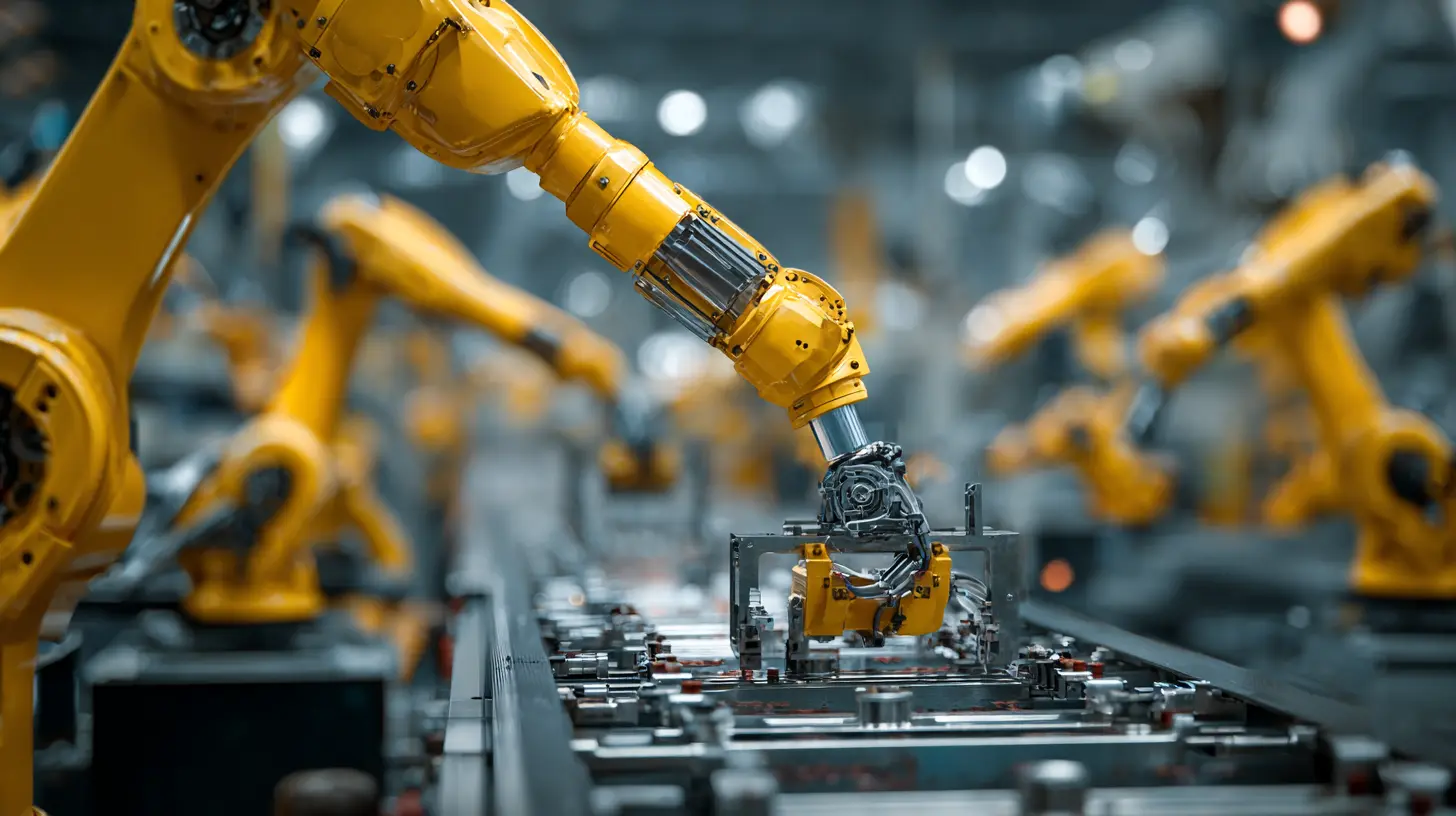
Many manufacturers assume that AI-powered robots are a plug-and-play solution. They are not. The upfront cost of the hardware is only part of the story. The real investment is in data, software, and integration. An AI model is only as good as the data it is trained on. If the training data does not cover the full range of variations the robot will encounter in production, the robot will fail in unexpected ways. Collecting, labeling, and maintaining that data is a significant ongoing expense.Another misconception is that AI makes robots infallible. It does not. AI models can make mistakes, especially when they encounter situations that are outside their training distribution. A vision system trained on images from a well-lit lab may struggle in a dim factory with dust on the camera lens. A robot that learned to grasp a certain type of part may fail when the supplier changes the material or the surface finish. These edge cases are not rare. They are the norm in real manufacturing environments.
There is also the issue of explainability. Traditional automation is transparent. If something goes wrong, you can trace the logic step by step. AI models, particularly deep neural networks, are often black boxes. They produce good results, but it is hard to understand why. This lack of transparency can be a problem for quality control, safety certification, and troubleshooting. Some companies address this by using explainable AI techniques, but these are still evolving and often come with a trade-off in performance.
Integration Challenges and Practical Advice
Integrating AI-powered robots into an existing manufacturing system is not just a technical task. It is an organizational one. The IT and operational technology teams need to work together. The data infrastructure must support real-time processing. The maintenance team must learn to diagnose AI-specific issues, such as model drift or sensor calibration. And the production managers must be willing to change their workflows to accommodate the new capabilities.Start small. Pick a single process that is painful, repetitive, or error-prone, and apply AI to that one task. Measure the results carefully. Look at not just cycle time, but also quality, downtime, and worker satisfaction. Once you have proven the value in one area, you can expand to other processes. Trying to transform the entire factory at once is a recipe for failure.
Another piece of advice is to involve the operators early. The people who work on the floor every day have knowledge that no data scientist has. They know which parts are tricky, which conditions cause jams, and which quality issues matter most. If you include them in the design and training process, the AI system will be more practical and more accepted. If you impose it from above, you will face resistance and a higher chance of failure.
The Role of Simulation and Digital Twins
One of the most powerful tools for deploying AI-powered robots is simulation. Before you put a robot on the factory floor, you can test it in a virtual environment that mimics the real one. This is where digital twins come in. A digital twin is a virtual replica of a physical system, updated with real-time data. By running AI models in a digital twin, you can validate their performance, identify potential failures, and optimize their behavior without risking production.Simulation is especially useful for training reinforcement learning models. Instead of letting a robot learn by trial and error on the actual line, which could be dangerous and expensive, you let it learn in simulation. The robot can try millions of different approaches, fail safely, and eventually find a good strategy. Then you transfer that strategy to the real robot. This approach, known as sim-to-real transfer, is widely used in robotics research and is becoming standard practice in industry.
However, simulation has its limits. The virtual environment must accurately reflect the real one, including friction, lighting, material properties, and sensor noise. If the simulation is too idealized, the robot will not perform well in reality. The best practice is to use simulation for initial training and validation, but to always test in the real environment before full deployment. You should also plan for continuous monitoring and retraining, because the real world changes over time.
Safety, Standards, and Regulatory Considerations
Safety is a critical concern when introducing AI-powered robots. Traditional safety systems rely on physical barriers, light curtains, and emergency stops. AI-powered robots, especially collaborative ones, require a different approach. The robot must be able to detect humans and adjust its behavior in real time. This is not just a technical challenge; it is also a regulatory one.International standards, such as ISO 10218 for industrial robots and ISO/TS 15066 for collaborative robots, provide guidelines for safe operation. However, these standards were written with traditional automation in mind. They do not fully address the complexities of AI, such as unpredictable behavior or the need for continuous validation. Manufacturers that deploy AI-powered robots must work closely with safety engineers and, in some cases, with regulatory bodies to ensure compliance.
The key is to design for safety from the start, not as an afterthought. This means choosing sensors and algorithms that are robust, implementing redundant safety mechanisms, and thoroughly testing the system in all foreseeable scenarios. It also means documenting the AI's decision-making process as much as possible, even if it is not fully explainable. Regulators and insurers are more comfortable with systems that have a clear safety case, even if the underlying model is complex.
The Economic Case and Return on Investment
The economics of AI-powered robots are not straightforward. The initial investment is higher than for traditional automation. You need better sensors, more computing power, and specialized software. You also need skilled personnel to develop and maintain the AI models. For a small manufacturer, this can be prohibitive. For a large one, it can still be a significant budget item.The return on investment comes from several sources. First, increased flexibility. If you can produce a wider variety of products with the same equipment, you reduce the need for multiple dedicated lines. Second, improved quality. Fewer defects mean less waste, fewer rework hours, and fewer customer complaints. Third, reduced downtime. AI can predict maintenance needs before a breakdown occurs, preventing costly interruptions. Fourth, better labor utilization. By automating the dull and dangerous tasks, you can deploy your workforce where they add the most value.
But the payback period can be long, and it is not guaranteed. Companies that fail to integrate the AI properly, or that choose the wrong use case, may see little benefit. The best approach is to conduct a thorough feasibility study before committing. Look at your actual production data, identify the bottlenecks and quality issues, and estimate the potential savings. Be honest about the risks and the hidden costs. If the numbers do not add up, it is better to wait or to choose a simpler solution.
Comparing AI-Powered Robots with Other Automation Options
It is important to place AI-powered robots in the broader context of automation options. At one end of the spectrum, you have fixed automation, which is cheap per unit but inflexible. At the other end, you have fully manual labor, which is flexible but expensive and inconsistent. AI-powered robots sit in the middle, offering flexibility and consistency, but at a higher cost than fixed automation and with more complexity than manual labor.There is also a middle ground: traditional robots with some sensor feedback, but without full AI. These systems use simple vision or force sensors to adjust their movements within a limited range. They are cheaper and easier to implement than AI-powered robots, and they are sufficient for many tasks. For example, a robot that uses a camera to find a part's approximate location, but does not learn from experience, might be enough for a simple pick-and-place operation.
The decision should be based on the task requirements. If the task is highly variable and requires continuous adaptation, AI is worth the investment. If the task is mostly predictable with occasional variations, a simpler sensor-based approach may be better. And if the task is completely fixed, traditional automation is the most economical choice. Do not let the hype around AI push you into overengineering your production line.
The Future: From Single Robots to Intelligent Systems
Looking ahead, the real transformation is not just about individual robots. It is about entire manufacturing systems becoming intelligent. AI-powered robots will be connected to each other, to the machines around them, and to the enterprise software that manages production. This is often called the smart factory or Industry 4.0. In this vision, the factory operates as a single organism, with data flowing continuously from sensors to AI models to actuators.In such a system, a robot that detects an anomaly can alert the maintenance system, which schedules a repair, which triggers a change in the production schedule, which tells another robot to adjust its output. This level of coordination is only possible with AI. It is also the source of the greatest competitive advantage. Companies that achieve this level of integration can respond to market changes in hours, not weeks. They can customize products at scale, and they can do so with minimal waste.
But this future also brings new challenges. Cybersecurity becomes a major concern, as a compromised AI system could cause physical damage. Data privacy becomes an issue, as the factory collects vast amounts of information about its operations. And the workforce must evolve, with a greater emphasis on digital skills and systems thinking. The companies that succeed will be those that treat AI not as a tool, but as a fundamental part of their operating model.
Practical Steps for Getting Started
If you are considering AI-powered robots for your manufacturing operation, here is a practical path forward. First, audit your current processes. Identify the tasks that are most costly, most error-prone, or most difficult to staff. These are your prime candidates. Second, talk to your suppliers and integrators. Ask them for case studies and references from similar industries. Do not rely on marketing materials. Third, run a pilot project. Choose a small, contained task and implement a complete solution, including data collection, model training, integration, and safety validation. Measure the results against your baseline. Fourth, evaluate the pilot honestly. If it worked, plan the scale-up. If it did not, understand why and decide whether to adjust or abandon.Throughout this process, keep the human element in mind. The goal is not to remove people from the factory. The goal is to make the factory more productive, more flexible, and safer. AI-powered robots are a means to that end, not an end in themselves. The best manufacturers will be those that combine the strengths of humans and machines, using AI to handle complexity and variability while relying on human judgment for strategy, creativity, and problem solving.
Conclusion
AI-powered robots are not a futuristic concept. They are a practical reality in modern manufacturing, and their role is growing. They bring flexibility, perception, and learning to the factory floor, enabling manufacturers to handle complexity that traditional automation cannot. But they are not a silver bullet. They require significant investment, careful integration, and ongoing maintenance. They also require a shift in mindset, from thinking of robots as programmable tools to thinking of them as intelligent collaborators.The manufacturers that succeed will not be the ones that adopt AI because it is trendy. They will be the ones that understand where AI genuinely adds value, where it does not, and how to manage the trade-offs. They will start small, learn fast, and scale wisely. They will invest in their people as much as in their technology. And they will recognize that the role of AI-powered robots is not to replace manufacturing, but to reinvent it.
all images in this post were generated using AI tools
Category:
Robotics TechnologyAuthor:

Gabriel Sullivan