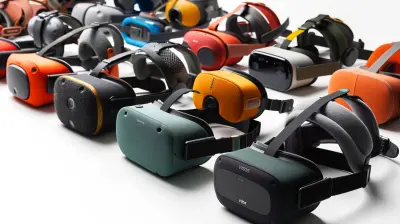
The Rise of AR Glasses in Online Learning
10 December 2025
Buckle up, folks—because online learning just got a serious glow-up. We’re not talking about another boring video lecture or endless scrolling through PDFs. Nope. We’re talking about AR glasses. Yup, that’s right—augmented reality is stepping into the education ring, and it’s not just throwing punches; it’s taking the whole title. AR glasses are redefining how we learn, and let’s just say, the future wears lenses.
So, sit tight, grab a snack (or your fancy eye-wear if you're already there), and let's break down this tech-fueled revolution in online learning. Because textbooks are so 2005.
What Are AR Glasses Anyway?
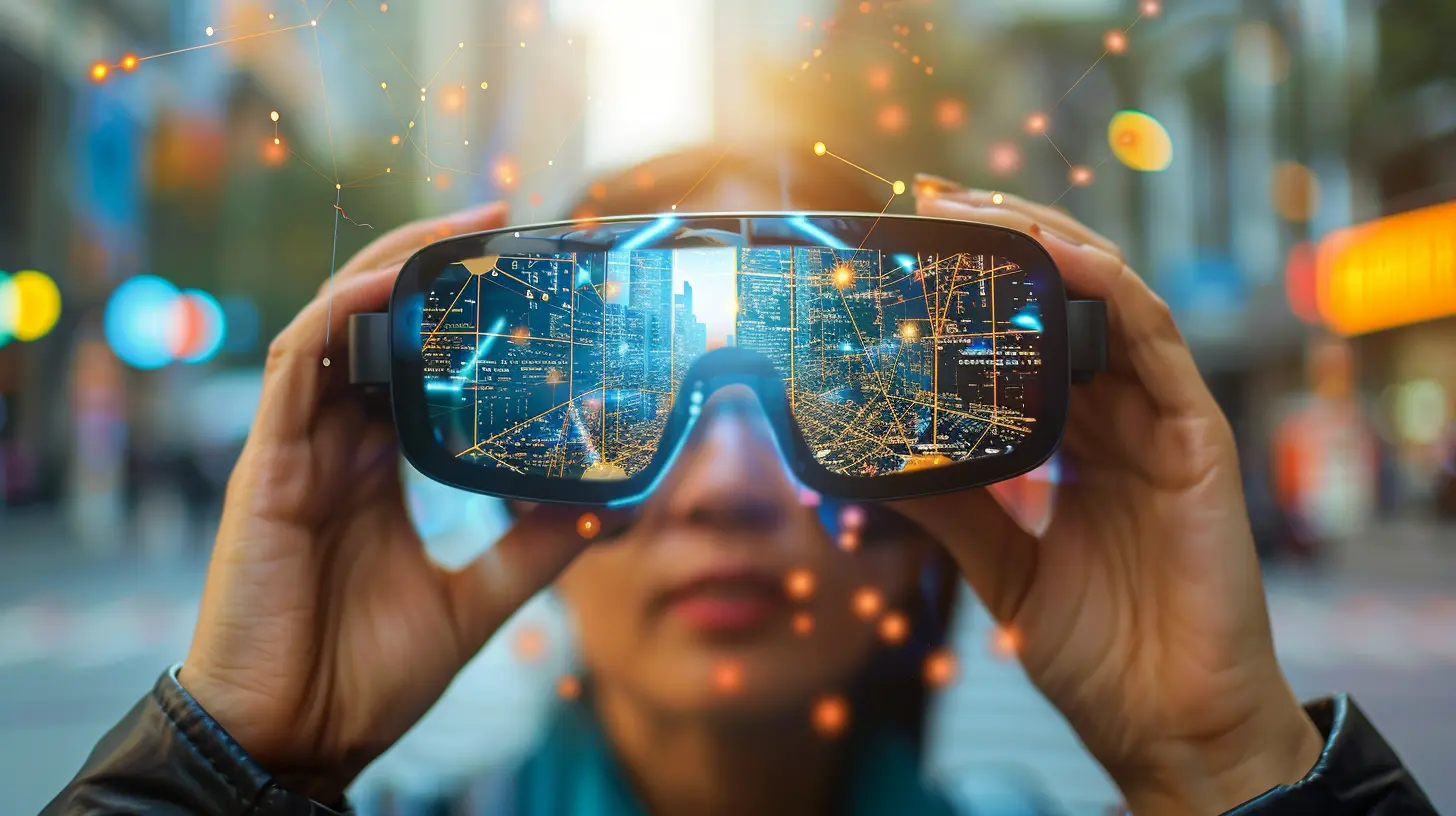
Okay, before we get carried away with the hype, let's break it down.AR (Augmented Reality) glasses are wearable devices that overlay digital content onto the real world. Imagine walking around your room and seeing 3D models of the Solar System, or your history timeline floating in front of your eyes. Instead of staring at a laptop screen, the content comes alive, interacting with your environment in real-time.
It’s like Iron Man's heads-up display—but for school.

Why AR Glasses Are Changing the Game in Online Learning
Let’s get one thing straight: online learning was already on the up, thanks to the internet and, well, a global pandemic forcing us all indoors. But even with all the Zoom calls and e-learning platforms, something big was missing—engagement.AR glasses fill that gap like guac at a taco night. Here’s why they’re total game-changers:
1. Learning Becomes Hands-On (Literally)
Ever tried learning how to perform heart surgery via an online video? Or build an engine by just reading about it? Yeah—not the easiest.But AR glasses allow students to interact with 3D models. You can move, rotate, and even walk around complex subjects. It’s like bringing a science lab or design workshop right into your living room. Students can learn by doing, not just seeing or hearing.
2. Increased Retention Rates (Because Boredom Isn’t in the Room)
Let’s be real—humans remember more of what they do than what they read. With AR, you’re not passively consuming content. You’re experiencing it.This kind of immersion boosts retention and comprehension. Want to visualize the tectonic plates shifting during an earthquake? Strap on AR glasses and watch those bad boys move right under your coffee table.
3. Personalized Learning Like Never Before
Everyone learns differently. Some of us are visual learners, others need physical interaction, and some (oddly) love textbooks.AR glasses can tailor the experience. Need extra time on complicated parts? Want a completely different angle of the problem? Boom—adjustable learning experiences tailored to YOU.
Add a sprinkle of AI in the mix, and we’re looking at a personalized tutor in your freaking goggles.
4. Real-Time Collaboration
Let’s not forget the social part—learning alone sucks.With AR glasses, students can collaborate in shared virtual spaces. Think multiplayer games, but for Math or History. And no, you don’t have to sit in the same room or even the same country. A virtual classroom can pop up anywhere, anytime.
Immersive, collaborative, and way cooler than the Brady Bunch-style Zoom grid.
The Evolution of AR Tech in Education
We didn’t just wake up one day and start wearing smart glasses to virtual biology class. It’s been a journey—one paved with Google Glass misfires, HoloLens experiments, and Meta making (ahem, attempting) moves in the metaverse.So how did we get here?
The Humble Beginnings: Google Glass
Remember Google Glass? Cool concept, poor execution, and major privacy red flags. But hey—it was the first hint that maybe, just maybe, we could wear our connected lives on our faces.Microsoft HoloLens and the Enterprise Push
Next came Microsoft’s HoloLens. Initially made for business applications and niche use cases, HoloLens proved that wearable AR tech could actually work. Educators started taking notes.Enter Meta and the Mainstream Hype Train
Fast forward a few years, and Meta (yeah, Facebook’s shiny new alter ego) dropped billions into AR and VR. While their metaverse dreams are still a work in progress, the attention brought serious momentum to AR hardware suitable for learning.Today, we’ve got sleeker, lighter, and more powerful AR glasses ready for classroom integration.
Breakthrough Examples: AR Glasses Making Waves in Education
Proof or it didn’t happen, right? Let’s look at some real-world cases where AR glasses are already flexing in education.1. Medical Schools Go Sci-Fi
Several med schools are using AR glasses for anatomy lessons. Instead of dead frogs or plastic models, students dissect digital humans who still have their dignity. Bonus: it’s reusable and way cleaner.2. Engineering Labs in Your Garage
Universities are using AR tools to let engineering students build and test models from home. You can assemble a jet engine or tweak a circuit—no lab coats or safety goggles required (well, maybe still wear those just in case).3. Virtual History Tours
Why read about World War II in a textbook when you can walk through Normandy with your professor guiding you virtually? AR allows for immersive historical recreations, and trust me, it’s way cooler than memorizing dates.4. Language Learning Gets Visual
Language apps are integrating AR to display objects with their translated words in real time. So when you look at your coffee mug, it tells you “tasse” (French) or “taza” (Spanish). It’s like Duolingo on steroids—minus the guilt-tripping owl.But Let’s Get Real—There Are Still Challenges
As much as we want to throw our old-school education into a time machine, AR glasses aren’t without their quirks.1. Price Tag Shock
Good AR glasses aren’t cheap. We’re talking upwards of $1,000 per unit. That makes them a bit... exclusive. Until prices drop, it’ll be more MIT than middle school.2. Tech Fatigue is Real
Do we really want to strap something to our faces for hours? Even if it’s for learning? It’s a valid concern and one that developers need to address with better ergonomics and lighter designs.3. Content Catch-Up
We need more high-quality educational content tailored for AR. It’s coming, but we’re not quite at "ready-for-every-classroom" levels just yet.4. Privacy and Data Concerns
Let’s not forget—we’re wearing devices that record environments and potentially capture sensitive data. Schools and companies will need rock-solid policies to keep student data safe.
The Future of AR Glasses in Education—What’s Next?
So, where do we go from here? Honestly, the future looks sharp—and not just in resolution.Mainstream Adoption Is Coming
As hardware prices drop and AR becomes more common in everyday life (think smart cities, remote work, etc.), schools and universities will jump on quicker than students on a snow day.Integration with AI and Machine Learning
Imagine AR glasses powered by real-time language translation, visual recognition, or even emotion tracking. AI will level up these devices from impressive to mind-blowing.Custom Curriculum and Smart Feedback
Picture this: you’re working on a math problem, and your AR glasses detect your confusion. Bam! They suggest a different approach or mini-lesson. No need to raise your hand and admit you’re lost.That’s when learning stops being one-size-fits-all and starts being yours.
Are AR Glasses the End of Traditional Education?
Not quite. Books, lectures, physical classrooms—all have their place. But AR glasses are like the rockstar cousin crashing the family reunion. They bring the fun, energy, and a fresh perspective.It’s not about replacing traditional tools but enhancing them. Giving students powers they’ve never had—like seeing the unreachable or interacting with the invisible.
And let’s be honest, anything that makes learning more engaging, accessible, and just plain cooler? That’s a win.
So, Are You Ready to Learn Like a Cyborg?
The rise of AR glasses in online learning isn't a trend—it’s the next chapter. One where you don’t just consume information—you live it. The glasses are on, the future is ahead, and your study guide just turned 3D.So don’t blink, or you might just miss the ed-tech revolution happening right before your eyes (literally).
all images in this post were generated using AI tools
Category:
Ar GlassesAuthor:

Gabriel Sullivan
Discussion
rate this article
2 comments
Gabriel Mathews
AR glasses are revolutionizing online learning, enhancing engagement and interactivity in unprecedented ways. The future is here!
January 27, 2026 at 12:49 PM
Gabriel Sullivan
Thank you for your insightful comment! Indeed, AR glasses are transforming online learning by fostering greater engagement and interactivity, making education more immersive than ever.
Devin Wilkins
AR glasses in online learning? Count me in! Imagine attending a lecture while simultaneously dodging virtual flying fish and sipping coffee through a holographic straw. Who said education can't come with a side of whimsical chaos?
December 14, 2025 at 4:08 AM
Gabriel Sullivan
Absolutely! AR glasses could transform learning into an engaging, immersive experience. Who wouldn’t want a little whimsy while studying?