How Robotics Is Fueling the Space Exploration Boom
4 August 2026
Space exploration has entered a phase that feels less like science fiction and more like a regular Tuesday at a busy tech company. We are not just sending rockets up and hoping for the best. We are sending fleets of robots, each one purpose-built for a specific job, and they are doing the heavy lifting, the tedious work, and the genuinely dangerous stuff that humans simply cannot do yet. The boom we are seeing right now, with multiple missions to the Moon, Mars, and beyond, is not happening because of better rockets alone. It is happening because robotics has quietly become the backbone of every serious space program.
Think about it. The last time humans walked on the Moon was 1972. That is over fifty years ago. But in the last decade alone, we have landed rovers on Mars, flown a helicopter on another planet, and grabbed samples from an asteroid. None of that involved a human footprint. All of it involved robots. The reason we are going back to the Moon now, and the reason we are seriously talking about Mars bases, is that we have figured out how to send machines ahead of us to prepare the way. This article is about how that shift happened, what it means for the future, and why you should care even if you never plan to leave Earth.
The Quiet Revolution: From Remote Control to Autonomy
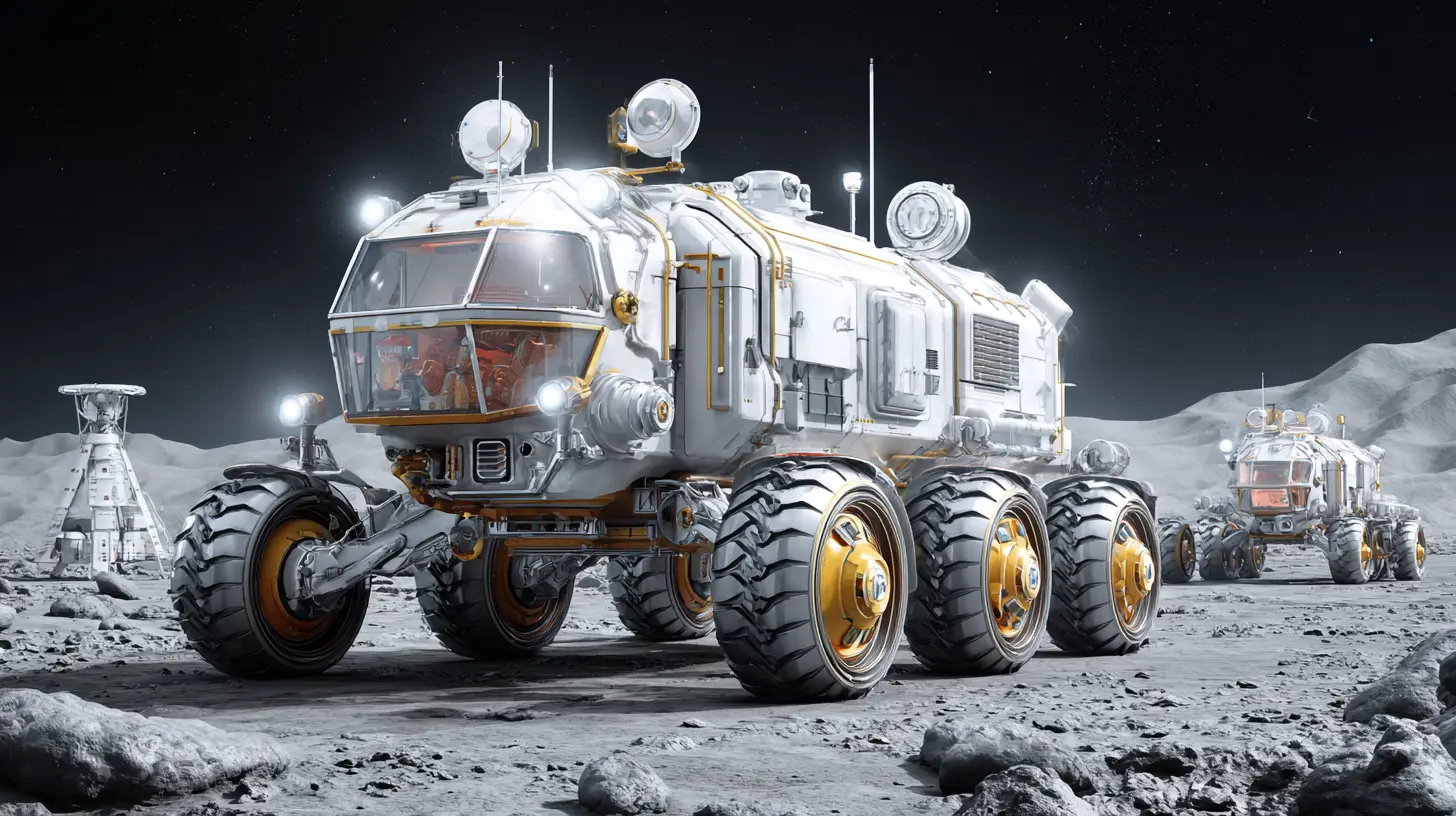
The first big misunderstanding people have about space robotics is that it is just remote control with a better joystick. That was true for the Apollo era and even for the early Mars rovers. But the reality today is completely different. The communication delay between Earth and Mars is anywhere from four to twenty-four minutes depending on where the planets are in their orbits. You cannot drive a rover on Mars with a joystick because by the time you see a boulder and react, the rover has already been sitting in the same spot for ten minutes. That is not driving. That is waiting.So the real revolution in space robotics is autonomy. The rover looks at the terrain, decides where it can safely go, calculates the risk of tipping over, and then moves on its own. The human operator on Earth just gives it a general direction and a list of priorities. This is a huge change in how we think about space missions. Instead of commanding every single movement, we are now writing software that allows a robot to make decisions in real time, millions of miles away, with no one to ask for help.
This shift matters because it changes the economics of space exploration. A rover that can operate autonomously for hours without human input can cover far more ground in a single day than a remotely controlled rover ever could. The Perseverance rover on Mars, for example, uses a system called AutoNav that lets it drive without stopping to wait for instructions. It is not just moving. It is thinking about where it is moving and why. That is a completely different beast from the Sojourner rover that landed in 1997 and had to be told every single inch of its path.
Why Autonomy Is Not Just a Luxury
Some people hear the word autonomy and think it is just a convenience, a way to save time. That is wrong. Autonomy is a survival mechanism. On the Moon, the surface temperature swings from over 120 degrees Celsius in the sun to minus 130 degrees in the shade. On Mars, dust storms can block sunlight for weeks, cutting off solar power. If a rover cannot react to these conditions on its own, it dies. There is no one on Earth who can pull it out of a dust storm or plug it into a backup generator.This is why modern rovers and landers are built with redundant systems and self-healing software. They can detect a failing component, switch to a backup, and keep working. They can also decide to shut down non-essential systems to conserve power when a storm is coming. This is not just clever engineering. It is the difference between a mission that lasts for a few weeks and one that lasts for years. The Opportunity rover on Mars was only supposed to last for 90 days. It kept going for almost 15 years because it had the ability to adapt to changing conditions on its own. That is the power of autonomy in action.
The New Workforce: Robots as Construction Workers
Most people think of space robots as rovers driving around taking pictures. But the next wave of space robotics is all about construction and manufacturing. We are not just sending robots to look at things anymore. We are sending them to build things. This is the single biggest change in the industry right now, and it is the reason the space exploration boom is not just a blip but a long-term trend.The Moon is the obvious target. The idea is to build permanent habitats there, but we cannot send enough concrete and steel to the Moon to do that. The cost of launching material from Earth is still around one to two thousand dollars per kilogram, depending on the rocket and the orbit. That means a single house would cost billions of dollars just in launch fees. So the solution is to use local materials. The Moon has regolith, which is essentially loose rock and dust. Robots can scoop it up, heat it, and turn it into bricks or even use it as raw material for 3D printing.
This is where robotics really shines. A 3D printer on the Moon does not care about the lack of atmosphere or the extreme temperatures. It just needs power, material, and a set of instructions. The European Space Agency has already tested 3D printing with simulated lunar regolith on Earth, and the results are promising. The idea is to send a fleet of robots that can autonomously build a landing pad, a habitat, or a radiation shelter before humans ever arrive. That would solve one of the biggest problems with long-term lunar habitation: how to keep people safe from radiation and micrometeorites.
The Trade-Offs of Building Robots vs. Sending People
There is a valid argument that sending humans to build things on the Moon is faster and more flexible than sending robots. Humans can adapt to unexpected situations in ways that robots cannot. If a wall falls over, a human can just push it back up. A robot might need a complete software update that takes months to test. So why bother with robots at all?The answer is risk and cost. Sending a human to the Moon is incredibly dangerous. You need life support, food, water, radiation shielding, and a way to get them back. That means a much bigger rocket, more fuel, and a much higher chance of something going wrong. A robot, on the other hand, can be built to survive conditions that would kill a human in minutes. It does not need to eat, sleep, or breathe. It can work for days on end without stopping. And if it fails, we lose a machine, not a person.
The current best practice is to use robots for the initial heavy lifting and then send humans for the final assembly and scientific work. This is the approach that NASA and its partners are taking with the Artemis program. The idea is that robots will scout the terrain, test the resources, and build the basic infrastructure, and then humans will come in to do the stuff that still requires a human brain and a human pair of hands. This hybrid approach is the most practical way forward, and it is likely to be the standard for the next several decades.
The Unsung Heroes: Robotic Arms and Sample Return Missions
When we talk about robotics in space, we often focus on rovers and landers. But some of the most important robots are not mobile at all. They are robotic arms attached to landers or orbiting spacecraft. These arms are responsible for some of the most delicate and important work in space exploration.Take the OSIRIS-REx mission, which grabbed a sample from the asteroid Bennu. The spacecraft did not land on the asteroid. It used a robotic arm to touch the surface briefly, fire a burst of nitrogen gas to stir up dust and pebbles, and then collect the material. This was an incredibly complex maneuver that had to happen autonomously because the communication delay made real-time control impossible. The arm had to be positioned perfectly, the gas had to be released at exactly the right moment, and the sample had to be sealed without spilling. It worked. The sample landed on Earth in 2023, and scientists are still analyzing it.
The same principle applies to the Mars Sample Return mission that is currently in development. The Perseverance rover is collecting rock and soil samples and storing them in tubes. The plan is to send another lander with a robotic arm to pick up those tubes, load them into a small rocket, and launch them into Mars orbit, where a spacecraft will capture them and bring them back to Earth. This is an extremely complicated chain of robotic operations, and every single step has to work perfectly. But if it works, it will give us the first direct samples of Martian material, which could tell us whether life ever existed there.
Common Mistakes in Designing Space Robots
One of the most common mistakes in space robotics is over-engineering. Engineers want to make a robot that can do everything, so they add more sensors, more actuators, and more redundant systems. But every extra component adds weight, power consumption, and complexity. And every additional part is a potential point of failure. The best space robots are the ones that do a few things extremely well, not the ones that try to do everything.Another mistake is underestimating the environment. The Moon is covered in sharp, abrasive dust that gets into every joint and crevice. Mars has windstorms that can cover solar panels in dust. The vacuum of space causes some materials to outgas, which can contaminate sensitive instruments. A robot that works perfectly in a cleanroom on Earth might fail within hours on the lunar surface. The best practice is to test robots in environments that simulate the actual conditions as closely as possible, including the dust, the radiation, and the temperature extremes.
The Role of AI and Machine Learning in Space Robotics
You cannot talk about modern space robotics without talking about artificial intelligence. The two are deeply intertwined. Autonomy is not just about following a pre-programmed path. It is about making decisions based on incomplete information, and that is exactly what machine learning is good at.For example, the Perseverance rover uses a machine learning algorithm to identify interesting rocks for study. The rover takes images, processes them onboard, and flags rocks that look like they might contain signs of past water or organic molecules. This saves a huge amount of time because the rover does not have to send every image back to Earth for a human to review. It does the initial triage itself.
This is a game-changer for the search for life on other planets. The volume of data coming from a single rover is enormous, and the bandwidth back to Earth is tiny. AI allows the rover to prioritize what is worth sending back. It also allows the rover to react to unexpected findings in real time, which is essential for a mission that is exploring unknown territory.
When AI Is Not the Answer
But there is a trap here. AI is not magic. It is only as good as the data it was trained on. And in space exploration, we often do not have good training data because we have never been to the places we are sending robots. You cannot train a machine learning model to recognize Martian rocks if you have never seen Martian rocks up close. So the best approach is to use AI for things that are well understood, like navigation and obstacle avoidance, and to rely on traditional rule-based systems for things that are less predictable.Another issue is reliability. An AI system that works 99 percent of the time is not good enough for a mission that cannot be repaired. If the AI makes a mistake, there is no one there to fix it. This is why most space robots use a combination of AI and traditional control systems. The AI handles the complex tasks, but there is always a simpler, more reliable system that can take over if the AI fails. This redundancy is not just good engineering. It is essential for survival.
The Commercial Angle: Why Private Companies Are Betting Big
The space exploration boom is not just about government agencies. Private companies are now major players, and they are driving a lot of the innovation in space robotics. Companies like SpaceX, Blue Origin, and Rocket Lab are focused on getting things into orbit cheaply, but there is also a growing ecosystem of smaller companies that are building specialized robots for space.The commercial interest is driven by a simple fact: space is becoming a place where you can make money. That was not true twenty years ago. Now, we have satellite servicing, asteroid mining concepts, and lunar resource extraction. All of these require robots. The companies that can build reliable, cost-effective robots for these tasks are going to be the ones that thrive.
But there is a tension here. Private companies are driven by profit, and space robotics is still a high-risk, long-payoff business. Many of these companies are burning through cash with no guarantee of a return. This has led to a few high-profile failures and a lot of consolidation. The companies that survive are the ones that can deliver results, not just promises.
The Risk of a Robotic Monoculture
One concern is that the commercial focus might lead to a kind of robotic monoculture, where everyone is building the same type of rover or lander because that is what gets funded. This would be a mistake. The history of space exploration shows that the biggest breakthroughs come from doing something different, not from doing the same thing better. The Ingenuity helicopter on Mars was a risky, unusual idea. It was not part of the original plan for the Perseverance mission. But it proved that we can fly on another planet, and that has opened up a whole new way of exploring.The best practice is to encourage diversity in space robotics. That means funding small, experimental missions alongside the big, established ones. It means accepting that some missions will fail but that the lessons from those failures are still valuable. The space exploration boom is not just about going back to the Moon or Mars. It is about building a new capability that we have never had before, and that requires a willingness to try new things.
What the Future Holds: Swarms, Humanoids, and Beyond
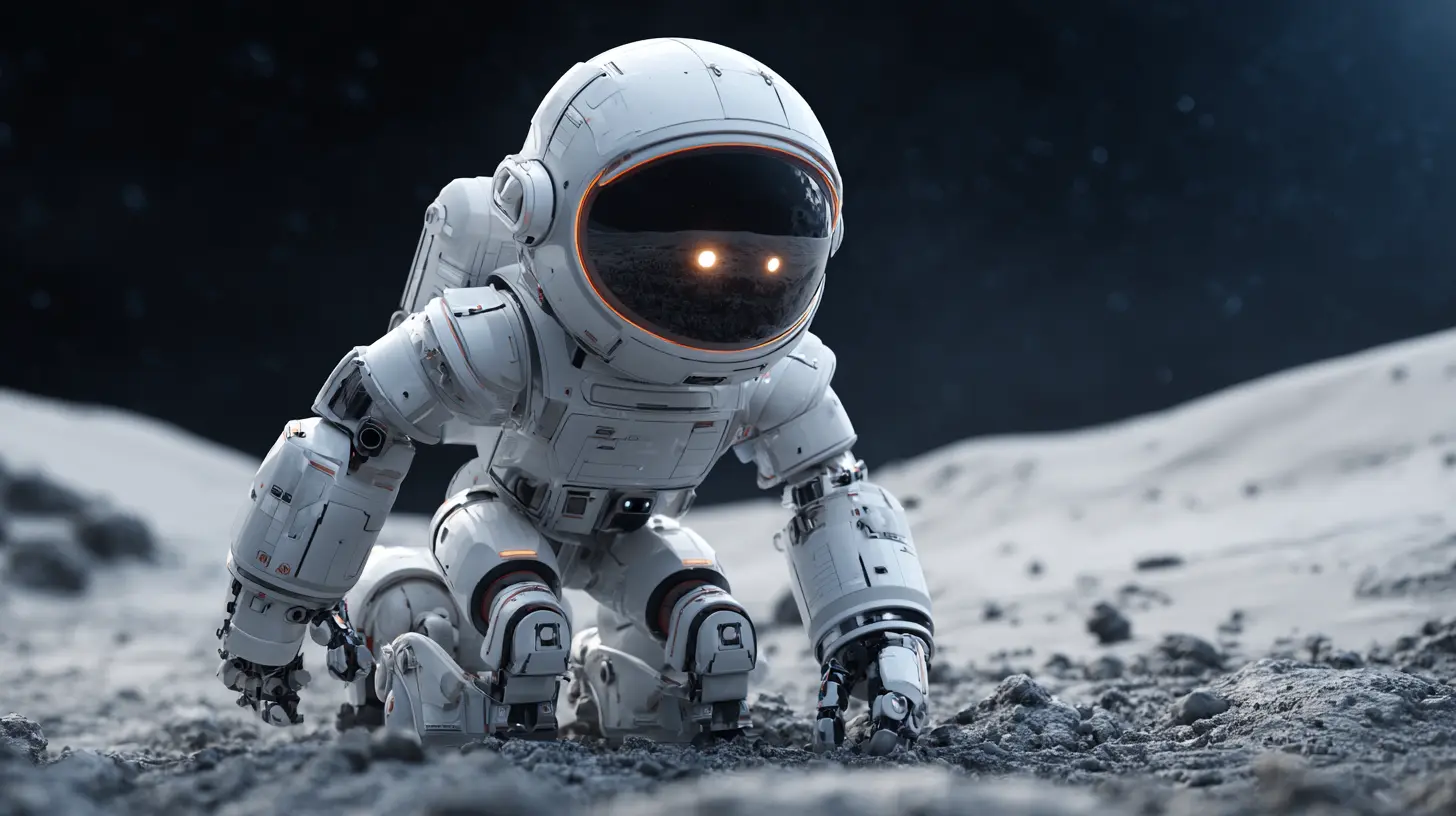
Looking forward, there are three big trends in space robotics that are worth paying attention to. The first is swarms. Instead of sending one large, expensive rover, we could send dozens of small, cheap ones that work together. This is similar to how ants or bees operate. Each individual robot is simple, but the collective can do complex things. The advantage is resilience. If one robot fails, the others can pick up the slack. The disadvantage is coordination. Getting a swarm to work together without a central command is a hard problem, but it is one that AI is well suited to solve.The second trend is humanoid robots. There is a lot of interest in building robots that look and move like humans because they could use the same tools and infrastructure that we use. If we are building a base on the Moon, we will want robots that can operate the same drills, valves, and connectors that human astronauts will use. A humanoid robot can do that without requiring a complete redesign of the equipment. The trade-off is that humanoids are complex, expensive, and harder to make reliable than simpler designs.
The third trend is in-situ resource utilization, which is a fancy way of saying using what is already there. This is the key to making space exploration sustainable. Instead of bringing everything from Earth, robots will mine water ice on the Moon, extract oxygen from Martian soil, and produce fuel from local materials. This is not science fiction. The technology is being tested right now, and it is the only way we will ever build a permanent presence beyond Earth.
The Biggest Misconception of All
The biggest misconception about space robotics is that it is a replacement for human exploration. It is not. Robots are not taking the place of astronauts. They are going ahead of them to make it possible for them to go at all. Every robot we send to the Moon or Mars is gathering information, testing technology, and building infrastructure that will make it safer and cheaper for humans to follow. The goal is not to create a robotic space program. The goal is to create a human space program that is supported by a robotic workforce.This is the real story of the space exploration boom. It is not just about bigger rockets or more ambitious missions. It is about a fundamental change in how we explore. We are no longer sending people into the unknown. We are sending machines to map the unknown, to prepare it, and to make it habitable. And when humans finally do arrive, they will not be pioneers. They will be settlers, walking on ground that was already broken by robots that worked tirelessly for years before they ever took a single human step.
That is the future we are building right now, one autonomous system at a time. And it is happening faster than most people realize.
all images in this post were generated using AI tools
Category:
Robotics TechnologyAuthor:

Gabriel Sullivan